CPIC 6mm PA6
CPIC · FiberTech Supplies
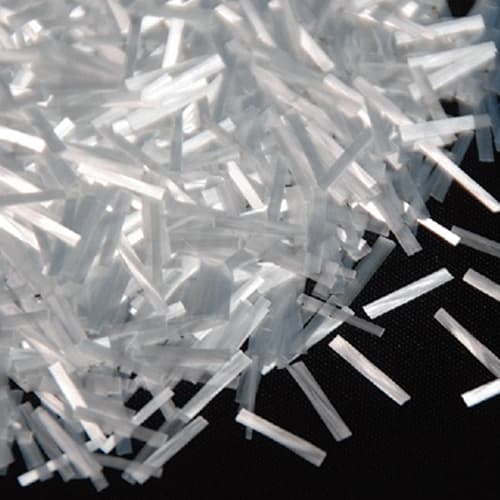
CPIC 6mm PA6
Tool housing
Technical Specifications
| Length | 6 mm |
|---|---|
| Diameter | 12 μm |
| Compatible Resin | PA6 |
| Application | Tool housing |
| Supplier | FiberTech Supplies |
Glass Fiber Chopped Strands Technical Data Sheet (TDS)
Glass Fiber Chopped Strands are high-performance reinforcement materials made by cutting continuous glass filaments into short lengths. They are designed for use in thermoplastics and thermosetting resins to improve mechanical properties such as tensile strength, dimensional stability, and thermal resistance.
Product Classification
| property | value |
|---|---|
| Product Types | Thermoplastic Grade (TP), Thermosetting Grade (TS) |
| Glass Type | E-glass (alkali-free), C-glass (chemical-resistant, optional) |
| Sizing Type | Silane-based, Amino, Epoxy-compatible, or custom surface treatments |
| Chopped Lengths | 3 mm, 4.5 mm, 6 mm, 12 mm, 25 mm (customizable) |
Physical Properties
| property | value |
|---|---|
| Filament Diameter | 9 – 17 µm (typically 13 µm) |
| Density | 2.58 – 2.64 g/cm³ |
| Bulk Density | 0.2 – 1.0 g/cm³ (depends on sizing and cut length) |
| Moisture Content | ≤ 0.10% |
| Loss on Ignition (LOI) | 0.5 – 2.0% |
| Aspect Ratio (L/D) | ≥ 100 (for long fiber reinforcement) |
| Tensile Strength of Base Filament | ≥ 2000 MPa |
| Tensile Modulus | 73 – 76 GPa |
| Softening Point | 845°C |
Resin Compatibility
| property | value |
|---|---|
| Thermoplastics | PP, PA6, PA66, ABS, PBT, PET, PC, PPS, PEI |
| Thermosets | UP (unsaturated polyester), EP (epoxy), VE (vinyl ester), PF (phenolic) |
| Sizing Code | Example: CS-EP-6 (Epoxy compatible, 6 mm cut length) |
Features & Advantages
- Excellent mechanical reinforcement — enhances tensile, flexural, and impact strength
- Fast resin wet-out — ensures homogenous dispersion during processing
- Good flowability and feeding behavior — suitable for extrusion and injection molding
- Low static buildup and low fuzz — improved cleanliness in compounding
- Corrosion and thermal resistant — ideal for harsh operating conditions
- Electrical insulation — stable dielectric properties over a wide frequency range
Processing Methods
Chopped strands are used in a variety of molding and compounding methods:
- Injection Molding — for automotive parts, home appliances, and power tools
- Extrusion Compounding — production of reinforced pellets or masterbatch
- Compression Molding — suitable for high-strength structural composites
- Hand Lay-up (in thermosets) — for reinforcement in putties, adhesives, and resins
Typical Applications
- Automotive: engine covers, battery trays, interior panels
- Electrical & Electronics: switch boxes, insulators, cable trays
- Appliances: washing machine panels, housings
- Industrial: pump housings, gratings, machine parts
- Construction: reinforced concrete additives, FRP rebars
- Marine: boat fittings, compound profiles
Storage & Handling
- Store in a dry, cool, and ventilated environment
- Avoid direct sunlight, moisture, and excessive stacking
- Recommended temperature: 15–35°C; RH < 65%
- Use within 12 months of manufacture for optimal performance
- After opening, seal bags tightly to avoid moisture pickup
Packaging
- PE-lined kraft paper bags, 20–25 kg net weight
- Optional big bag packaging for bulk use (500–1000 kg)
- Delivered on fumigated wooden pallets with shrink-wrap protection
Quality Assurance
All chopped strand batches are tested against international standards:
- Moisture and LOI verification
- Fiber length consistency & dispersion tests
- Sizing compatibility & resin wet-out testing
- Ash content and bulk density measurement
- Mechanical property retention in composite matrix
Customized sizing, cut length, resin compatibility, and packaging solutions are available upon request. Contact our technical service team for composite design optimization and sampling.